Lorne House BoxLorne House BoxLorne House BoxLorne House Box
BOOK NOW
  • Rooms
    • Breakfast
  • Whole House
    • Group & Wedding Stays
  • Things to Do
    • What’s On
    • Bath
    • Castle Combe
    • Lacock & Wiltshire
    • Box
    • Golf Breaks near Bath
    • Food & Drink
    • Stories & Local Guides
    • Gallery
  • About
  • Contact
  • Book Direct
  • Rooms
    • Breakfast
  • Whole House
    • Group & Wedding Stays
  • Things to Do
    • What’s On
    • Bath
    • Castle Combe
    • Lacock & Wiltshire
    • Box
    • Golf Breaks near Bath
    • Food & Drink
    • Stories & Local Guides
    • Gallery
  • About
  • Contact
  • Book Direct
View of Box Wiltshire

Hidden Box

  • August 28, 2020/
  • Posted By : Liz Matthews/
  • 0 comments /
  • Under : Guest Info, Local History

Updated 3 October 2026

Hidden Box offers more than its railway tunnel and Bath stone: a closer look reveals a village with Roman remains, a historic lock-up, local industry and a music-making connection. These are stories to explore alongside a stay at Lorne House, rather than a list of attractions all open for tours.

The Blind House

The small stone Blind House on the High Street is a Grade II listed former lock-up, dated by Historic England to the early eighteenth century. Its compact shape and stone dome make it one of the village’s distinctive historic buildings.
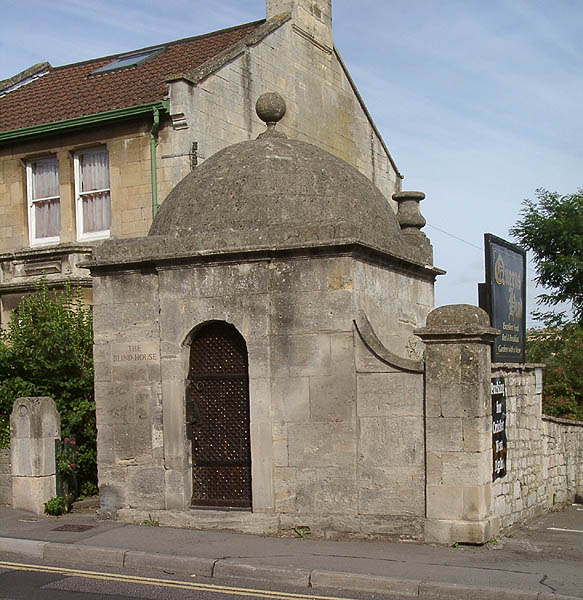
Small stone Blind House with domed roof in Box
The Blind House, photographed for the original Lorne House local guide.

Read the official Blind House listing for its architectural details.

The Roman village beneath today’s Box

Near the parish church lie the buried remains of a substantial Roman villa. Archaeological work has identified elaborate buildings and mosaic floors beneath the modern village. This is hidden history in a literal sense: it should not be treated as an excavated attraction available to walk into.

The Box Roman Villa project explains the discoveries and shows reconstructions and a model. The Historic England record provides the archaeological background.

Remembering the Rising Sun

The Rising Sun pub on Box Hill was destroyed in a gas explosion in December 1957, with the loss of three members of the Griffin family. The memorial is a place to pause and remember a tragedy that remains part of the village’s shared history.

Box People and Places records the pub’s earlier life and the family who lived there. The official Box Heritage Trail includes the former pub site.

Tennis balls made locally

Box’s industrial story is not confined to stone. Price of Bath continues the local tradition of manufacturing tennis, squash and racket balls, including personalised products. Check the company’s own information for its current range and location; a mention here does not imply factory tours.

Real World Studios

Peter Gabriel’s Real World Studios occupies a former mill complex in Box. It is an important part of the village’s musical story, but it is a working recording studio. Its official FAQ states that tours are not available to the general public, with virtual views available through its website.

Hidden Box: railway and underground history

The nearby tunnel and former quarry workings link Box to engineering and military history. Read our underground city story and Awdry and Thomas the Tank Engine article for two very different sides of that connection.

To explore on foot, use our walking guide and the current official route information.

Keep exploring

  • Box Walks & Local Points of Interest
  • Lorne House & Thomas the Tank Engine
  • A Secret Underground City

All stories & local guides

Make Lorne House your base

Stay in one of our eight en-suite bedrooms, or bring everyone together for a whole-house stay. Check live prices and availability through our Book Direct page.

Plan your stay


Thomas the Tank Engine Books

Lorne House & Thomas the Tank Engine

  • April 29, 2020/
  • Posted By : Liz Matthews/
  • 0 comments /
  • Under : Local History

Updated 3 October 2026

Lorne House has a special connection with the stories of Thomas the Tank Engine. Wilbert Awdry, who went on to create The Railway Series, lived here from 1920 to 1928. His family called the house Journey’s End.

Thomas the Tank Engine: inspiration beside Box Tunnel

The railway near Lorne House helped shape Awdry’s imagination. As a boy, he listened to steam engines working on the incline at Box and imagined their sounds as conversations between characters with distinct personalities. Those memories later helped inspire the story in which Edward assists Gordon’s train up the hill.

It is a wonderfully local connection: a childhood sound outside a Wiltshire bedroom becoming part of stories enjoyed around the world. Awdry developed the tales for his son Christopher; The Three Railway Engines, the first book in the series, appeared in May 1945.

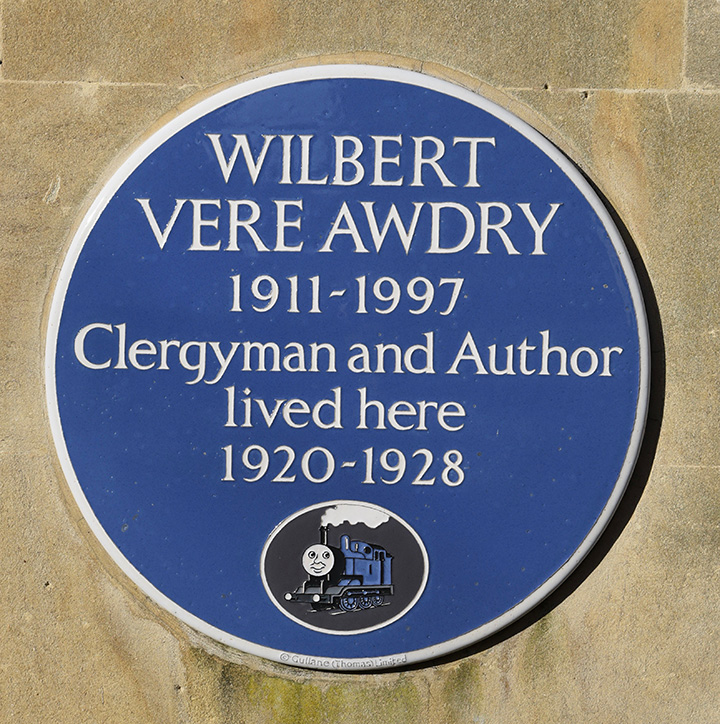
Blue plaque commemorating Reverend Wilbert Vere Awdry on the stone wall at Lorne House
The blue plaque at Lorne House commemorates Awdry’s childhood here.

Journey’s End and a family love of railways

Wilbert’s father, the Reverend Vere Awdry, was also interested in railways. Local historical photographs record that enthusiasm, while former resident Geoff Bence remembered being told about a model railway in the greenhouse at Lorne House.

These are memories of the house in an earlier period. The greenhouse and garden descriptions in historical accounts do not describe facilities available to guests today; the verandah is our guest outdoor space.

The blue plaque at Lorne House

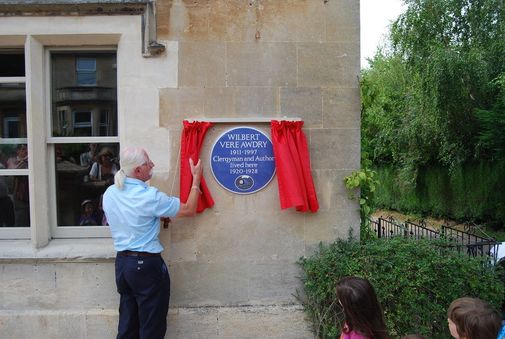
In 2012, Awdry’s family visited Lorne House for the unveiling of its blue plaque. It is a lasting reminder of the house’s place in his childhood and of Box’s railway heritage.

Christopher Awdry beside the commemorative plaque at Lorne House
Christopher Awdry at the plaque unveiling, from the Lorne House archive.

Explore the Thomas the Tank Engine connection

Our history of Lorne House follows the families who lived here. For railway landmarks and a walk through the village, see our Box walking guide.

Further reading: Cambridge Past, Present & Future’s Awdry biography; Vere Awdry photographs; Geoff Bence’s recollections.

Keep exploring

  • A History of Lorne House & its Occupants
  • Box Walks & Local Points of Interest
  • Hidden Box

All stories & local guides

Make Lorne House your base

Stay in one of our eight en-suite bedrooms, or bring everyone together for a whole-house stay. Check live prices and availability through our Book Direct page.

Plan your stay


A Secret Underground City

  • April 27, 2020/
  • Posted By : Liz Matthews/
  • 0 comments /
  • Under : Local History

Updated 3 October 2026

The secret underground city at Corsham tells an extraordinary chapter of British history: former Bath stone workings adapted for wartime industry and, later, a government headquarters intended for use in a nuclear crisis.

From Bath stone to wartime use

The underground quarries grew alongside the demand for building stone and the arrival of the Great Western Railway. In the years before the Second World War, parts of the workings were converted into ammunition-storage facilities. Wartime activity also included an underground aircraft factory.

The Ministry of Defence’s illustrated history explains how these different uses developed. It is important to distinguish the wider quarry network from the later government bunker, rather than treating every underground chamber as one installation.

A secret underground city for Cold War government

In the 1950s, work created a potential relocation site for central government. Known as the Central Government War Headquarters and by codenames including Burlington, it was designed to support government operations below ground.

Historic England’s records describe accommodation for the Prime Minister, operations rooms, a telephone exchange and a radio studio. These practical spaces make the story especially striking: an emergency headquarters needed places to work, communicate and live, not simply shelter.

Messages below ground

Communication was central to the plan. Alongside telephone facilities and a radio studio, a Lamson pneumatic-tube system carried messages through the complex. These surviving elements are recorded separately in the National Heritage List for England.

Explore the history through official sources

The site was declassified in 2004. Declassification does not establish public visitor access, so this article makes no promise of entry or tours. Use the official records and illustrated booklet to discover the story.

  • Ministry of Defence: Corsham Tunnels — A Brief History (PDF)
  • Prime Minister’s rooms and operations rooms
  • GPO telephone exchange
  • Radio studio
  • Lamson terminus and fan room

Discover Box above ground

Lorne House is a base for exploring the village and the surrounding area. Our Box walks guide points to public routes, while Hidden Box introduces more of the locality’s history.

Keep exploring

  • Hidden Box
  • Box Walks & Local Points of Interest

All stories & local guides

Make Lorne House your base

Stay in one of our eight en-suite bedrooms, or bring everyone together for a whole-house stay. Check live prices and availability through our Book Direct page.

Plan your stay


A History of Lorne House & its Occupants

  • April 14, 2020/
  • Posted By : Liz Matthews/
  • 0 comments /
  • Under : Local History

Updated 3 October 2026

The history of Lorne House is woven into Box’s story: stone quarrying, changing family homes, the childhood of Wilbert Awdry and, more recently, welcoming visitors to the village.

The history of Lorne House: Victorian beginnings

The house’s recorded history dates Lorne House and its neighbouring property, Glenavon, to 1876, built by a branch of the quarry-owning Pictor family. Lorne House was originally known as Lorne Villa. Earlier research for this website traced a succession of residents through census and local records.

That background gives the house a place in the wider story of Box, where Bath stone and the railway shaped the village’s development. The house has changed through the years as successive residents adapted it to their lives.

1920–1928: the Awdry family’s Journey’s End

Wilbert Awdry lived at Lorne House from 1920 to 1928. His family renamed it Journey’s End. The nearby railway and the sounds of steam engines became part of the imaginative world he later drew on for The Railway Series.

His father, the Reverend Vere Awdry, shared his enthusiasm for railways. Local photographs and former residents’ memories preserve glimpses of that family life. Our Awdry article explores the connection in more detail.

From 1928: the Bence family

Geoff Bence’s first-hand recollections record his family’s move to Lorne House in 1928. His parents, Leslie and Violet, were part of the village’s shopkeeping community.

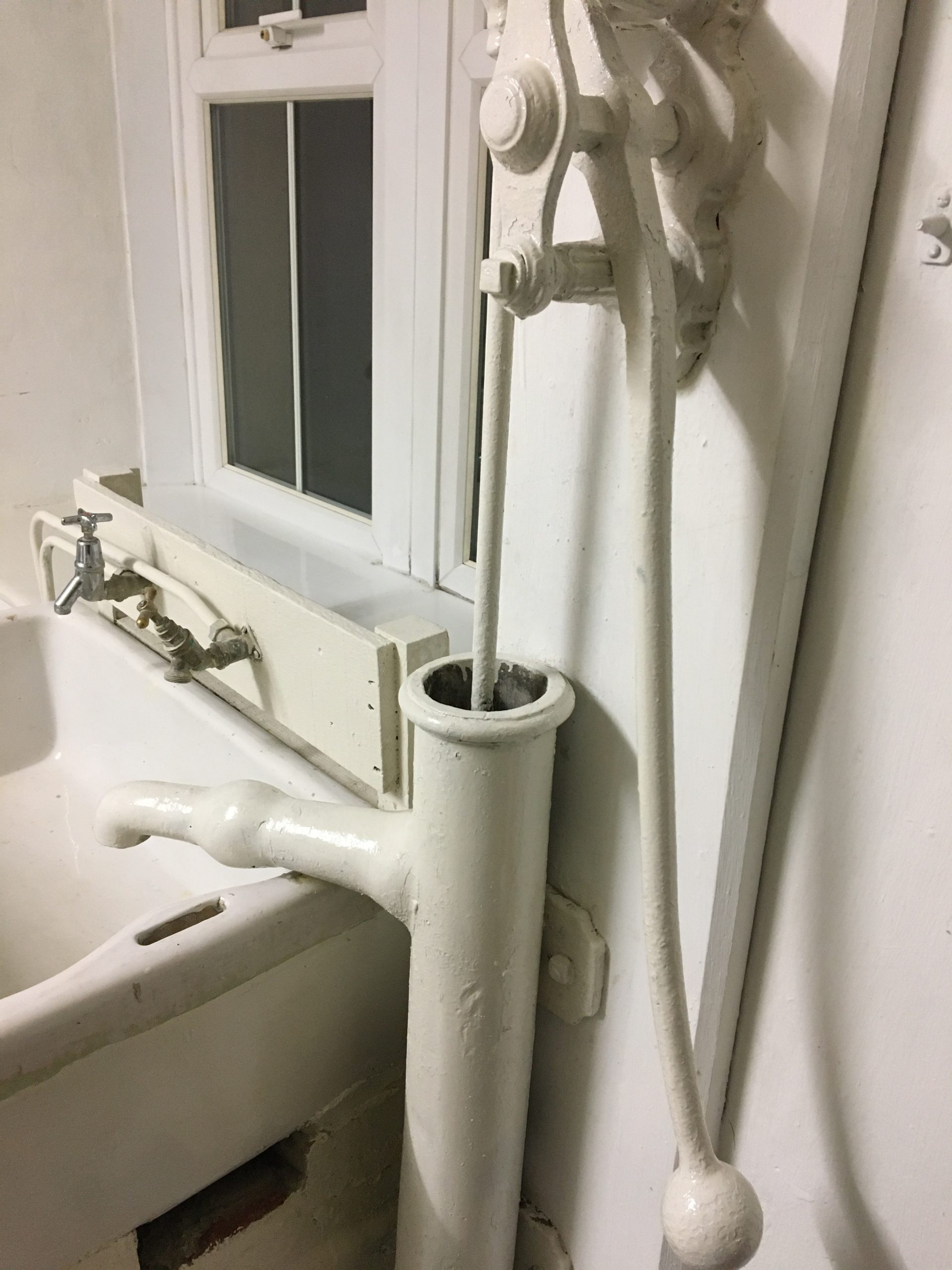
His account makes the old house feel lived in: a basement washroom, a room for charging the accumulators that powered wireless sets, and a cool cellar used for storing food and preserving eggs. He also remembered a pump drawing water from a well. These are historical memories, rather than descriptions of today’s guest facilities.

Old metal water pump beside a sink at Lorne House
Archive photograph of the water pump mentioned in the house’s earlier history.

Read Geoff Bence’s original account on Box People and Places for the fuller family story.

A new chapter in the history of Lorne House

The house’s earlier history records its conversion to guest accommodation in the early 2000s. Mike and Fran Ralli subsequently refurbished Lorne House, with a project documented by Julie Kent Interiors. Bob and Liz Matthews continued the business from 2016.

In January 2026, Harry and Eliza took over running Lorne House. Today it welcomes guests to eight en-suite bedrooms, with both individual room stays and whole-house stays.

Meet the family welcoming you today

Visit About Harry & Eliza for the current chapter of Lorne House. For more of the village’s past and places to explore, follow our Box guide and Things to Do.

Historical background: Lorne House’s original house-history research; Geoff Bence’s recollections; Vere Awdry photographs. Harry and Eliza’s January 2026 takeover is confirmed by the family.

Keep exploring

  • Lorne House & Thomas the Tank Engine
  • Hidden Box
  • Box Walks & Local Points of Interest

All stories & local guides

Make Lorne House your base

Stay in one of our eight en-suite bedrooms, or bring everyone together for a whole-house stay. Check live prices and availability through our Book Direct page.

Plan your stay


Recent Posts
  • Why you should “Book Direct”
  • Local Recommendations for Garden Lovers
  • Hidden Box
  • Lorne House & Thomas the Tank Engine
  • A Secret Underground City
Recent Comments
    Archives
    • March 2021
    • February 2021
    • August 2020
    • April 2020
    Categories
    • Guest Info
    • Local History
    Meta
    • Log in
    • Entries feed
    • Comments feed
    • WordPress.org
    Lorne House

    LH

    A characterful house in Box.
    Boutique B&B rooms and exclusive whole-house stays near Bath.

    London Road, Box
    Wiltshire, SN13 8NA

    01225 742597 · Voice & WhatsApp
    info@lornehousebox.co.uk

    Explore your stay

    B&B rooms
    The whole house
    Gallery
    Things to do
    Food & drink
    Stories & local guides
    Find us

    Follow Lorne House on Instagram ↗

    Make yourself at home

    Choose a room for a few nights, or bring your favourite people together for the whole house.

    Booking information

    Ask Harry & Eliza on WhatsApp ↗

    Guest reviews
    Tripadvisor ↗ · Booking.com ↗

    Manage Consent
    To provide the best experiences, we use technologies like cookies to store and/or access device information. Consenting to these technologies will allow us to process data such as browsing behavior or unique IDs on this site. Not consenting or withdrawing consent, may adversely affect certain features and functions.
    Functional Always active
    The technical storage or access is strictly necessary for the legitimate purpose of enabling the use of a specific service explicitly requested by the subscriber or user, or for the sole purpose of carrying out the transmission of a communication over an electronic communications network.
    Preferences
    The technical storage or access is necessary for the legitimate purpose of storing preferences that are not requested by the subscriber or user.
    Statistics
    The technical storage or access that is used exclusively for statistical purposes. The technical storage or access that is used exclusively for anonymous statistical purposes. Without a subpoena, voluntary compliance on the part of your Internet Service Provider, or additional records from a third party, information stored or retrieved for this purpose alone cannot usually be used to identify you.
    Marketing
    The technical storage or access is required to create user profiles to send advertising, or to track the user on a website or across several websites for similar marketing purposes.
    • Manage options
    • Manage services
    • Manage {vendor_count} vendors
    • Read more about these purposes
    View preferences
    • {title}
    • {title}
    • {title}
    Click here to drop us a message!
    Scan the code
    WhatsApp
    Need help booking your stay? Chat with us directly on WhatsApp!
    Message Us
    Powered by Joinchat